28 February 2017

The Batangueño Side of Lasallian Entertainer Ogie Alcasid

Image credit:  PinoyStop.com.

The name Herminio Jose Alcasid Jr. will not ring a bell; but the nickname Ogie of the multi-awarded artist and entertainer will be recognized anywhere. Presently with the network ABS-CBN, Alcasid has had a long and distinguished career as “singer-songwriter, television presenter, comedian, parodist, and actor.1”

19 February 2017

How Selected Batangas Government Agencies Fared in the 2016 Anti-Red Tape Survey

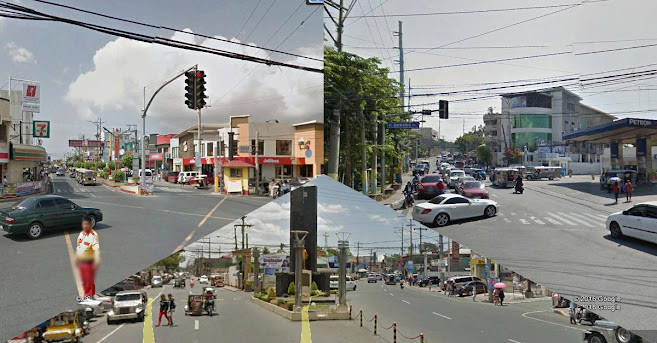
Image credit:  Google Street View on Google Earth.

Three municipalities, one barangay and four municipal water districts were rated “Failed” in the 2016 results of an anti-red tape survey released by the Civil Service Commission (CSC). The CSC is the lead agency in the implementation of the 2007 Republic Act No. 9485, also known as “An Act to Improve Efficiency in the Delivery of Government Service to the Public by Reducing Bureaucratic Red Tape, Preventing Graft and Corruption, and Providing Penalties Thereof.1”

16 February 2017

Revisiting the Batangueño Accent in ABS-CBN’s “A Love to Last” Series

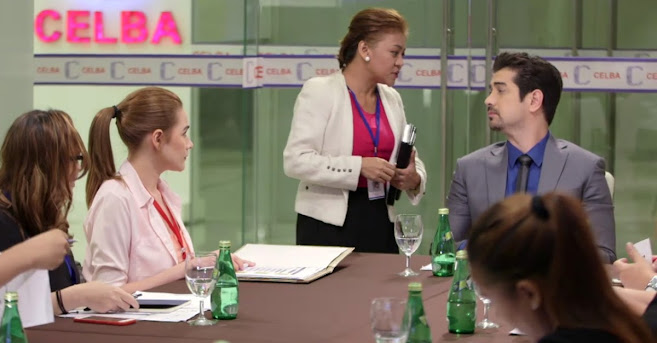
Image captured from Iwantv.ph.

I had heard of the phony Batangueño accent used in the ABS-CBN series “A Love to Last” from a friend soon after it premiered on primetime; but last Friday was the first time I got a glimpse while channel-hopping of what he was talking about. He was right. The use by some of the series’ characters of the famous “punto” or accent is as phony as a three dollar bill.

13 February 2017

Comparative Rankings of Batangas Colleges and Universities Based on Recent Board Exams


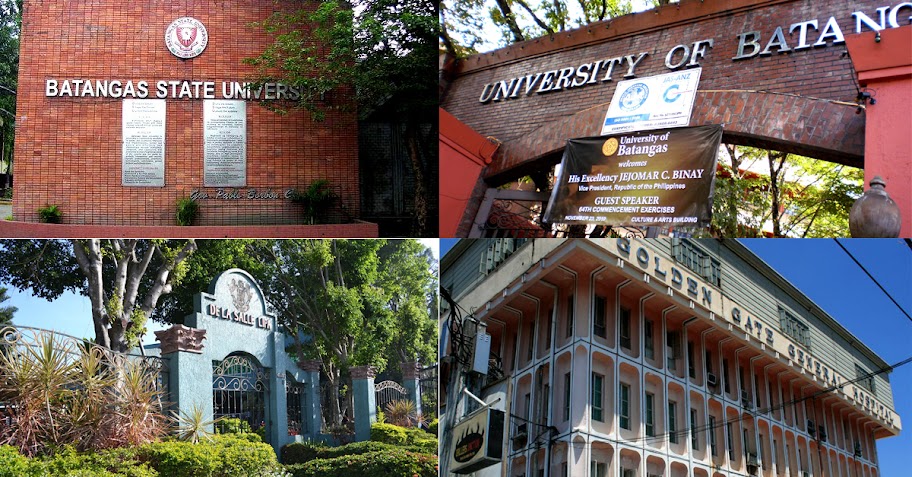
Colleges and universities in the Province of Batangas continue to do well in national licensure examinations almost a year after Life So Mundane first published an article detailing the academic achievements of these schools. This is according to data made publicly available by FindUniversity.ph, which describes itself as “a directory of academic programs offered by colleges and universities in the Philippines.”

11 February 2017

Bolang Bilog and the Genetics of Baldness

Image credit:  The DVDshow.com.

Back in the day, irreverent as my mother could be, she used to entertain the entire family with tales of how she fell, as she put it, for the “matandang kalbo” (bald old man) – meaning my father. My mother was only six years younger than my father, so there. Like I said, irreverent.

08 February 2017

Batangas Uno and other Antique Furniture that Sell for at least ₱1M

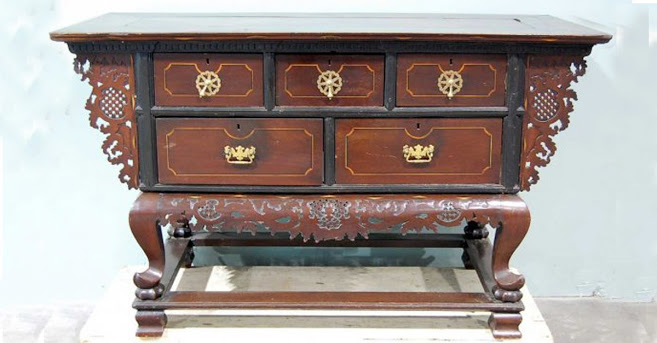
The Batangas Uno.  Image credit:  Murvyn Callo on Flickr.

In September of 2010, in what was regarded as the “Deal of the Decade,” an authentic Batangas “Uno” altar “mesa” or table was sold at an auction conducted by the Four Seasons Auction House for the amount of US$650. This is ₱32,441.50 at today’s dollar exchange rate. The furniture was created by an unknown craftsman simply referred to by antique enthusiasts as Batangas I Master and was made of tindalo2 and kamagong3 with lanite4 used for the inlay.

05 February 2017

Balisong, the famed Batangas Butterfly Knife, May Not Have Been Invented in Batangas

Image credit:  By Iamthawalrus - Own work, CC BY-SA 3.0, https://commons.wikimedia.org/w/index.php?curid=30337122.

Like many young boys my generation, I used to own a balisong back in the seventies when I was in high school. Not that I ever intended to use it. It was just one of those things one kept for a just-in-case moment, not to mention owning one brought with it some level of prestige. Besides, because all other ethnicities in this country thought all Batangueños carried a balisong, it felt almost obligatory to reinforce the stereotype and own one.

02 February 2017

Shortened Periods Just to Watch Muhammad Ali Fight


← Previous

There was something that the Brothers used to do sporadically that I just cannot imagine happening at the school or any other school in the present day: declare “shortened periods” so everyone could watch fights of Muhammad Ali. It was ridiculous, really. All subjects were shortened to twenty minutes from the standard forty.

On the other hand, Ali was this larger than life figure whose career was followed by an entire planet. My entire family used to watch his fights on television. Yes, even my Mom. But in October of 1974, he was the underdog trying to regain the world championship title from the undefeated champion George Foreman. The latter was just this humongous beast who routinely put his challengers to sleep.

The “Rumble in the Jungle,” so named because the championship fight was being held in Zaire in the African continent, was being beamed lived via satellite worldwide. As expected, the Brothers declared that all morning subjects would be shortened so that by ten or eleven, students who could left school to watch the match at home.

I don’t now recall why I watched the match at the library; but this must have been after our Zenith television set had broken down and Mom refused to have it repaired on account of the frequent fights that broke out in the family for viewing rights.

The Brothers had considerately set up a console at the library and there many like me who did not go home and were happy and eager for the opportunity to watch. I had no pretenses about understanding the technical side of boxing, but when watching Ali there was absolutely no need to. On the canvass, to quote his own words, he was just this graceful figure who “floated like a butterfly and stung like a bee.”

This bout in Zaire, however, was an entirely different matter. From the opening round to the eighth, Ali hardly threw a punch, taunting Foreman instead to keep coming at him. The latter needed no invitation and kept pommeling Ali with punch after solid punch. Initially, it looked bizarre to be watching a boxing match when only one boxer was throwing punches. Then, it became apparent to all of us inside the library that Ali was employing a strategy and trying to tire Foreman out.

It was still depressing to watch from a pro-Ali point of view, and that it was dangerous as a strategy was also plain for all and sundry to see. I mean, Foreman was really powerful! While Ali had his forearms and hands up to cover his body and head the entire time, there was still the possibility of one killer punch slipping through.

Then, before the end of the eighth round, Ali woke from his stupor and unleashed a swift combination of punches aimed at Foreman’s head and body. I can still recall the cries inside the library when he did. But then, the seemingly unthinkable just a while back happened: Foreman started to teeter on his feet and then fell heavily onto the canvass. He couldn’t get up in the ensuing count of ten. Ali was again world champion!

Everyone in the library, except for the few who rooted for Foreman, erupted in pure joy. Ali was just pure genius. When he retired, before Manny Pacquiao became a household name the only other boxer that I was interested to watch was Sugar Ray Leonard. Ali’s retirement, at least to me, just left this large void that to my mind no boxer to date has really managed to fill.


My football coach in my junior year was Brother Jess Hechanova. Years later, I would hear that he had left the Christian Brothers and become a priest. Until his recent retirement, he was President of St. Louis University in Baguio City.

But as football coach back when I was in high school, he was, well, enthusiastic. He loved his football, alright; but let us just say that the football didn’t love him back. He was certainly not in the same league, at least as a player, as Brothers Ray Suplido or James de Guzman.

There was this one afternoon during scrimmage, for instance, when he looked visibly annoyed that he couldn’t nick the ball from off my feet as I dragged it this way and that to keep it away from him. My teammate Sonny Figueroa, a senior, couldn’t stop laughing after training about how I was “toying around” with Brother.

I coached football teams for three decades years later, and especially before I reached middle age, none of the hundreds of boys who trained under me could do the same to me. Put it this way, had anyone had the nerve to actually try, he would have ended up face down on the pitch eating grass. I would have kicked the bastard!

So I’m thinking, perhaps Brother Jess wanted to kick me that afternoon, too! Wink! Being a Brother does have its disadvantages.

For all the amount of time I spent on the football field practicing, in fact typically we played an average of no more than five matches in each of the three years that I played high school varsity football. My own players when I was already coaching never knew how spoilt they were for matches. A typical season for my teams in the eighties up to the new millennium started in mid-August and the boys were playing almost every weekend until the end of February.

When I was in high school, the entire season consisted of a match or two against St. Bridget’s College – and this was if they had a team at all – probably a game or two against teams from the air base and finally the annual defeat to a team from Greenhills.

On the rare occasions that we had playing engagements in Manila, I tossed and turned the night before each game unable to sleep from sheer excitement and anticipation. And this was why, each time, I probably ended up playing way below what I was capable of, drained as I was from the utter lack of sleep.

TOC | 

------------------------------------------------------------------------------------------
If you enjoyed this article, please click the Like button or share it freely on social media. It helps to pay this site's domain name and maintenance costs.



Bisugo and Vuko: The Namecalling Adolescents Are so Fond of


← Previous

“Bisugo” is the Tagalog name for this pinkish scaly fish called the threadfin bream in English. It was also the mindless moniker given by somebody in my class to Mr. Alberto Platon, the Filipino teacher among the school’s pioneers. He was this father figure on campus who was generally well-respected, but some insolent fool among my classmates – I don’t recall who – thought his eyes looked somewhat like that of, well, a bisugo.

Personally, I couldn’t see the resemblance; but boys being boys, the nickname soon caught on. It wasn’t just the sort of moniker one called a teacher by behind his back. Cries of “Bisugo!” could be heard every once in a while along the corridors, at the gym or at the outside courts whenever Mr. Platon was present or passing through. Even during Filipino class, the brazen would for no apparent reason just blurt out bisugo.

Mr. Platon generally just ignored these obviously mindless adolescent cries. But there was this one afternoon when I was at the library with my classmates Tats Briones and Sebastian “Baste” Luistro. We must have been researching an assignment for one subject or another. We saw Mr. Platon enter the library but paid him no attention because we were enrapt in our work. We also saw him heading straight to our table, which was nothing unusual because he was our teacher and he just probably wanted to say hello.

But he caught all three of us off-guard when, once he was standing next to our table, he asked, “Boys, what is this bisugo that I keep hearing during class?”

Awkward…

Why-oh-why did he have to ask us, of all people? We weren’t among those who loved to call out the fish’s name, but in hindsight that was probably why he asked us. For a moment, all Baste, Tats and I could do was look uncomfortably at each other, until someone gave this totally lame story about the bisugo being a moniker of one of our own classmates.

I didn’t for one moment think that he bought the story we tried to sell him, but he didn’t press us and that was certainly a relief.

Many years later, when I was Year Level Moderator and he attended the graduation of his daughter at the Brother Henry Virgil Gymnasium, I caught sight of him at the front lobby when he was about to leave, I suppose, with his family. “Mr. Platon!” I called out to him, happy to see one of the old guard. He turned around, looked at me for a moment and uttered, “Torrecampo.” Then he turned around and started down the stairs.

That was odd. I would have been happy to chat. If I am being honest, when I came to think about it, yeah well, I did give him reason to hold a grudge. This had nothing to do with the bisugo incidents at all.

I had known him since I was a freshman in high school, and on many occasions since he had asked me to train under him so I could represent the school in oratorical and declamatory interscholastic competitions. The reason, he always said, was that unlike my classmates, I spoke Tagalog neutrally or without the trademark Batangueño accent.

I didn’t think that at all. What he probably meant was that I spoke with less of the accent than my classmates. After all, I grew up inside the air base where Batangueños were a minority and probably still are to the present day. Besides, my Dad was Ilonggo and my Mom was from Nasugbu, so whatever influence the local accent in Lipa had over me was likely counterbalanced by that which I was used to at home.

In truth, however, I was averse to memorizing lengthy Tagalog pieces for those interscholastic contests. That was why, albeit he was persistent, I declined each time he asked. I can’t explain it rationally, but while I have always found conversational Tagalog effortless, memorizing formal Filipino has always been difficult.

There was this one time in my senior year when I represented my class in an inter-year level English oratorical contest. I won with a piece that I myself had written. After the contest, as I made my way back to my classroom, Mr. Platon fell in step with me and mildly said to me, “Why is it that when the contest is in English, you participate?”

What was I to say to that? Of course, I felt guilty. The accusatory tone was unmistakable, and it made me feel bad for him. That said, I have always been headstrong. Despite my guilt, I continued to decline participating in Filipino contests.


I used to have classmate whose name was Wilfredo Maraña. He was from either Taal or Lemery. His middle initial was “V.” Nobody knew what it stood for; and nobody for one moment thought that all one had to do was to actually ask him. One day, somebody conjectured that the “V” perhaps stood for Vuko, a deliberately misspelled version of the Tagalog word for the coconut fruit. It was just the sort of mindless humor that adolescents everywhere are capable of, but from that day onwards, Willie, as this classmate really was known, started to be called Vuko. With a “V.”

Willie was a good sport and never lost his cool even when the Vuko thing got out of hand. There was this one time during PE class when somebody must have sneaked back into the classroom. With a piece of chalk, whoever it was wrote in capital letters on all four corners of anything that had four corners the famous letters V-U-K-O. The letters were on the four corners of the front and rear doors, the corners of the front and back blackboards, the bulletin board and likely even the teacher’s table.

When we all returned from the playing courts, it was instant pandemonium. We just couldn’t stop laughing!

TOC | Next →

------------------------------------------------------------------------------------------
If you enjoyed this article, please click the Like button or share it freely on social media. It helps to pay this site's domain name and maintenance costs.


Military Training and Foreigners in our Class


← Previous

Junior year was when we had to undergo the first of two years of compulsory military training. During my time in high school, the course was called Preparatory Military Training or PMT. Because I was born to an Air Force family, there was irony in that I have always had nothing but disdain for military training. The fact of the matter is that I was born happily civilian.

Officer training for PMT began in our sophomore year, and many of my classmates signed up. Never even crossed my mind to do so. Apart from the fact that training would have taken me away from football, the truth simply was that I was just not interested.

PMT training days during my junior year, therefore, I always placed under the category “utter waste of time.” It was not hard by any means, and especially so since many of the officers were my own classmates. But I found little practical value to all the shouting that went on for the two hours of each training day along with the endless to-ing and fro-ing around the field. I had yet to hear of a war that was won by soldiers who knew nothing but to march all day long.

Besides, since I was raised in a military family, I was fully aware that the nation’s military equipment was antiquated. Thus, or so I reasoned inside my adolescent mind, were we ever stupid enough to get involved in a shooting war with anybody, there was always going to be one conclusion. Why train, then? I would have found PMT more relevant if we were actually taught to fight with our bare hands, but marching all day long? Pushups, squatting, pumping and duck-walking?


It was either the second or the third grading period when we said goodbye to our American classmate Daniel Johnson. He first came when we were freshmen, the son of a United States Peace Corps volunteer who was serving as an agriculture consultant to local farmers.

He was always something of an anomaly in our class. He stood 6’ 2” and, therefore, towered above everyone not just in our class but the entire campus. He had blond hair, deep blue eyes and, because he was from Minnesota, also had very fair skin.

Despite his size, he was really very gentle. Thus, he was initially bullied. He got smacked on the head or back and teased mercilessly for no other reason than he was different. It was almost akin to a fraternity initiation; and I had to hand it to Daniel. He rode the treatment all in good humor.

Can’t say the same for this Australian kid who was assigned to our class midway through our junior year. We were a lot less sophisticated about foreigners than high school kids of today. In a way, this new Aussie kid was even stranger than Daniel was. The latter at least learned to speak Tagalog, and that helped in his being subsequently accepted.

The Aussie kid was the son of an expatriate employee at either the Shell or Caltex refinery. Apart from the fact that he didn’t speak Tagalog, his Aussie accented English was quite unintelligible to most in the class. Inevitably he got picked on, arguably more viciously than Daniel was when he first arrived.

It was always in the latter’s favor that he was this towering giant. But the Aussie kid was no taller than most of my classmates. One day, the swats on his head and body got so vicious he ended up a crying wreck inside the classroom. He lasted no more than a couple of weeks. His parents probably pulled him out and enrolled him in a different school. I never really found out.

To this day, I still cringe at how my class treated the poor lad. It was behavior totally contrary to the so-called hospitality that Filipinos generally love to boast about. I make no excuses other than it was just the way things were. Perhaps, it was also a perverse Batangueño way of showing affection.

Many years later when I was already in administration, Brother Mario Dacanay, who was a Visayan from Mindanao, told a group of us fellow administrators during a workshop that one of the strangest idiosyncrasies he observed about his Batangueño students when he first arrived at De La Salle Lipa was their tendency to whack him on his back with their palms before shouting, “Brother!” as a form of greeting. At first, he used to think the whacks were some form of attack. We all laughed because Brother Mario was a martial arts practitioner. He explained that before long, realized that his students were just being affectionate in a quirky sort of way.

To get back to Daniel, on his last day in school, he was called to the front to formally say goodbye to the class. I don’t now recall the things that he said, but it was how he said these that I still remember to this very day. He delivered his parting words in Tagalog, but this wasn’t the remarkable thing. It was his unmistakable Batangueño accent that was drawing guffaws and rounds of applause.

I don’t think that I had ever seen anything stranger than a tall, blond, blue-eyed and fair-skinned boy speaking with an accent as shamelessly Batangueño as ours was.

TOC | Next →

------------------------------------------------------------------------------------------
If you enjoyed this article, please click the Like button or share it freely on social media. It helps to pay this site's domain name and maintenance costs.



My First-Ever Failing Grade and the Fatal Puerto Galera Trip


← Previous

But even this was to prove problematical, at least for me personally. Sir Cris wanted us to submit stuffed animals to add to his collection at the Biology laboratory. This presented two problems. First, we each had to kill an animal, something that I was loathe to do. Second, we had to inject it with formaldehyde and submit it mounted on a piece of wood for display at the laboratory. My Mom would have nothing of the formaldehyde, so effectively she settled the conundrum for me.

In other words, I would not be submitting a stuffed animal to make up for the blank quizzes that had I submitted. I was not worried about failing Biology because my grades in the first two grading periods were high; and I was certain that I would also be able to breeze through the fourth quarter without any problems.

But this third grading period, I already knew, was going to be the first and only time in my life that I would receive a failing grade while I was in Basic Education. Sir Cris certainly didn’t disappoint and gave me a 69. My only concern was that I had broken my parents’ “no failure” policy at home. I kept hedging when either my Mom or my Dad would wonder out loud why they had not seen my report card yet.

In fact, my parents did not see my report card again until after the end of the school year, when as expected I passed Biology with plenty to spare despite the 69 of the third quarter. Both my parents took it all in stride, and my Mom was particularly philosophical after I reminded her that she wouldn’t let me buy any formaldehyde.

Incidentally, the collection of fetuses that would become a fixture at the Biology laboratory was submitted by my classmate Vicente “Dunol” Magsino Jr. as his project for this same make-up work that Sir Cris gave us. Dunol’s family owned the Magsino hospital uptown and the fetuses were likely from their patients.

Perhaps, all my classmates and I will forever remember Biology and our junior year for that unfortunate incident at Puerto Galera, where all third year classes had gone in August or September to examine the marine ecosystems at the lagoon close to the town. We got to Puerto Galera without a hitch, but the examination of the coral beds had to be aborted even before we got started.

First of all, more than a hundred students and a few adults were loaded onto two outrigger boats. Many of us in the first boat could see that the second boat was already badly overloaded. So overloaded, in fact, that many students perched themselves on the roof of the boat’s cabin.

In hindsight, perhaps this was the sort of field trip that was always bound to go awry. An examination of beachside coral beds would have been a hundred-fold safer. At Puerto Galera, the chosen coral reef was about a kilometer or two from the wharf and could only be reached by taking outrigger boats.

Maybe Sir Cris and the stand-in Principal, Brother Bong, who had accompanied us, should have known better than to allow the second boat to leave the wharf with students precariously seated on the cabin’s roof. In the end, when the boat capsized a couple of hundred meters from the coral colony where it was headed, what caused it to flip over was – or so we heard from those on that second boat – one of the chaperone teachers panicking when the boat started to tip to one side and jumping into the water.

This started a chain reaction, and as the other students on the roof jumped into the water as well, the boat lost its equilibrium and capsized. Three people died in that accident, but probably the most remarkable thing was that all the students were for all intents and purposes unscathed.

The fatalities included Miss Balbastro, the Secretary to the Principal who came along as one of the chaperones; and Sir Cris’ landlady – who we heard had gone along because of the fresh fish – and her little girl.

Meanwhile, word that reached Lipa was that it was the inter-island vessel that took us to Puerto Galera instead of one outrigger boat that had capsized. The following day when I was safely back home, my father took me aside and quietly told me that he had not told my Mom about the incident; and that he was fretting about what he would tell her if it turned out that I was among the fatalities.

TOC | Next →

------------------------------------------------------------------------------------------
If you enjoyed this article, please click the Like button or share it freely on social media. It helps to pay this site's domain name and maintenance costs.



The "War" with Sir Cris Zarate


← Previous

Many of us couldn’t wait for our junior year because finally, we would have Biology under Mr. Crisanto Zarate, or Sir Cris as he wanted to be called. We had known him since we were in elementary because he used to teach high school classes near our classroom; and I had, of course, visited his home in Lucena when I was a freshman.

My older brother Ronaldo also used to entertain the entire family with stories of Sir Cris’ antics inside the classroom, so I for one couldn’t wait to become his student. Despite all the stories of hilarity, none of us was under any illusion that Biology would be a stroll in the park. We had heard from our brothers and upperclassmen that being under Sir Cris would also mean hours upon hours spent memorizing phyla and subphyla and classes and so on and so forth.

For the most part, Biology was fun and mostly because of the teacher’s personality. But we also had to do a few things that I would never have voluntarily done were we not required to do so as course requirements. For instance, the frog dissection was the yukkiest thing I had had to be part of in my life up to that point.

Being told to bring to school a bullfrog was bad enough. This was still the seventies when Lipa was still basically agrarian; so bullfrogs croaking at night after a downpour was like a concert of off-tune baritones. They were all over the place. There were certainly plenty in our own yard at home, but I have always had an aversion for cold-blooded thingies and would not be caught dead catching or, worse, holding onto one.

That was why, early on the day when the dissection experiment was to be performed, I joined a group of my classmates on a sortie to the garden of the Brothers’ House in search for frogs. My good friend and classmate Renato “Tats” Briones was my opposite and wasn’t squeamish at all about holding frogs. I left it to him to catch one for me. A good thing, too, that the dissection was to be performed by predetermined groups. I let my groupmates do the slicing and stayed back, instead, pretending to be observing when in all honesty, I was trying to suppress the urge to throw up all over the table.

In the third quarter of the school year, our class had a serious falling out with Sir Cris. To be perfectly fair to him, he did announce right on the first day of school that one of the maxims he managed his classes by was “kasalanan ng isa, kasalanan ng lahat” (one’s fault was considered everyone’s fault). It seemed fairly innocuous at the time, but there was this one day when we were assigned group work.

I don’t now recall why, but for one reason or the other, the first row was exceedingly noisy doing the group work. The rest of the class certainly wasn’t so. Sir Cris was increasingly becoming irritable and after a couple of warnings went unheeded, he finally decided to impose his favorite form of punishment not just on the noisy first row but on the entire class.

We were sent out to the yard outside the classroom to pluck fifty makahiya (mimosa) plants each from the ground. He wanted each mimosa plucked out roots and all. How annoying was that? We were, but naturally, quarreling with classmates from the first row while we were out on the yard. But there was something else brewing. We were angry at Sir Cris about our being punished for something we were not guilty of. Suddenly, “kasalanan ng isa, kasalanan ng lahat” wasn’t so amusing, after all.

This was the seventies. While Martial Law had already been declared, that it was had a lot to do with student activism. Students fought for what they thought was right; and many of us certainly felt that this was one occasion when collective action was required.

We all agreed that, starting with the next Biology class, the moment Sir Cris walked in, everyone would be sitting up straight with arms neatly folded atop our desks. Nobody would speak, and especially so when called up to recite. Anyone asked a question, it was agreed among us, would stand up respectfully but refuse to say a word. If Sir Cris gave a surprise quiz, we would all write our names and nothing else. We wanted to let him know that we were displeased and we certainly did.

Thus, the once-lively Biology class suddenly turned funereal. The silence was definitely unnatural and creepy. We all knew that taking collective action had its risks, and particularly so because we were an A-section. That said, it also somehow felt perversely good to be able to stand up to a figure of authority.

After a day or two of the silent treatment, Sir Cris couldn’t take it any longer, gave an impassioned speech and stormed off. Our class officers followed him to the Biology laboratory where they found him slouched over a table, they later told us, bawling his heart out. But the class, feeling injustice had been done to us, felt largely unrepentant.

The incident even reached the attention of the stand-in Principal, Brother Antonio “Bong” Narciso, who had to intervene and arrange a clear-the-air dialogue between us and Sir Cris. It was after this dialogue that the latter agreed to give us a project to help us make up for the empty quizzes that we submitted while we were, effectively, on strike.

TOC | Next →

------------------------------------------------------------------------------------------
If you enjoyed this article, please click the Like button or share it freely on social media. It helps to pay this site's domain name and maintenance costs.


When the Speech Teacher Hurled His Book Across the Room


← Previous

One of the things that I used to think odd when I was already a teacher at De La Salle Lipa was that there was no subject called Speech. I don’t exactly recall how many years we had this subject, but I am sure we had it for at least two years, and certainly on my junior year.

We had a great teacher in Mrs. Rosemarie Robles, the former Miss Dimaandal, with her almost North American accented English. From her, we learned the phonetic nuances of the Queen’s language and how to properly enunciate English sounds.

The most common exercise we used to have was the “quickie talk,” when we were randomly called to the front of the classroom to talk about anything under the sun. Through this so-called quickie talk, Mrs. Robles was able to ascertain how fluent we were in the English language and, more importantly since the subject was after all Speech, how correct we were in our pronunciations.

One time, instead of the usual quickie talk, she asked us to write original short poems and then afterwards called us individually to the front to read out loud our own poems. My classmates Amando “Ding” Mirasol, one of the jokers in the class, started to read out his, “Who draws the cloud and plays so loud, baby it’s the guitar man…”

You all have to understand, although Mrs. Robles didn’t really have a reputation for being a “terror,” she still wasn’t the sort of teacher under whom the class could become a circus. That was why, as Ding recited his so-called poem, while everyone’s eyes gleamed with unmistakable humor, we could all only but laugh in a restrained manner. The teacher was not a dunce and she could tell that Ding’s poem wasn’t original at all. In fact, he was reading out the lyrics of Bread’s “The Guitar Man,” a certifiable hit during the time.

This year, Mrs. Robles was also with child and later went on maternity leave. While she was away, her place as our Speech teacher was taken over by a gentleman by the name of Mister Evangelista, whose first name for the life of me I cannot now recall. He was a dark-skinned gaunt man whose eyes were deep-set and surrounded by even darker skin, something which gave him the look of, well, a cadaver. Before long, somebody in the class had given him a very unflattering name – Mister Bangkaylista. That was totally mean; but we were in high school so it was also totally normal.

Mrs. Robles was always going to be a hard act to follow, but the problem was that nobody in the class could figure out why Mister Evangelista was ever assigned to teach a subject such as Speech. His English was not bad by any means. But his diction, which was what Speech was all about, was horrifying.

Under Mrs. Robles, we used to have this drill during which we learned to properly differentiate similar sounds like the long “e” and the short “i.” “Class,” she would bid us, “repeat after me. Beat, two-two.” Nobody ever discovered what the two-two meant but we dutifully chanted after her, anyway.

The first time we did the same drill under Mister Evangelista, the book he was holding went flying across the room. “Class,” he began, “re-peht after me… Beht… toh-toh…” He even closed his eyes momentarily as he pronounced the words, as though he was having an orgasm. Immediately, insane laughter reverberated around the classroom. Except that, we soon discovered, Mister Evangelista had a terrible temper and would not be bullied by a class of adolescents. The laughter died down as soon as the book went flying from out of his hand to the back of the room.

We continued to laugh at him inside our heads whenever we did the Speech drills because his pronunciation was atrocious, but after that book-throwing incident, nobody dared laugh out loud. We just wished that Mrs. Robles’ husband’s hormones weren’t so active and that she would come back soon.

TOC | Next →

------------------------------------------------------------------------------------------
If you enjoyed this article, please click the Like button or share it freely on social media. It helps to pay this site's domain name and maintenance costs.


The Math Wizards Baltik and Saltik


← Previous

I generally loved my junior year but for the fact that we had two numbers subjects. The first was inevitably Algebra again, which we had since sophomore year and which I was certain I would not like any better. The teacher was Mister Rolando Baltazar, incidentally also our Homeroom Adviser. The nickname “Baltik” for which he would universally become known was given by some smartass at about this time, although I cannot say with any certainty that the smartass was from my class.

His reputation for being a “magician” was established at about this time as well. This reputation was not flattering at all, but how it came to be owed partly to his personality and partly due to students’ being students. Everyone who has ever been in his class knows that he was soft-spoken and rather tended to devote his attention to the students in the front rows. Although he was soft-spoken, he was nonetheless not the sort of teacher under whom students went wild. Instead, because his voice was not very loud and he seldom paid attention to those at the back, there was a tendency for students there to use the period under him to work on assignments in other subjects that were due for submission later in the day.

He was a good teacher, make no mistake about it! This much my Mathematics-oriented classmates used to vouch. The problem always was that to those who only half-listened to his lectures while working on assignments in other subjects, when he underlined the answers derived from the solutions he had carefully taught moments earlier, it always seemed like the work of Harry Potter himself.

The other numbers subject was Geometry, taught by Mister Rene Salazar. He was really no stranger to us because he had taught us since Grade 6. It’s funny when I come to think about it now, that if Mister Baltazar was given a nickname behind his back, so was Mister Salazar. The latter was referred to by some as “Saltik” so that the two Math teachers were something of a tandem called Baltik and Saltik. The former’s nickname stuck all the way through to his retirement years later; but by the time I returned to the school to teach in the eighties, the nickname Saltik had been completely forgotten.

In contrast to Mister Baltazar, Mister Salazar always had this booming voice that reached not just to the rear of the classroom but likely to the adjoining rooms as well. But naturally, nobody dared do assignments in other subjects during his class.

Being me, I found Geometry only marginally less mystifying that Algebra. It was a good thing that Mister Salazar knew our class well and knew who to push and who not to. I very much fell into the second category. He had this habit of calling students to the front and asking them to solve problems on the backboard. When he got annoyed if somebody was having particular difficulty solving what seemed to him a routine problem, his voice could get really terrifying.

I was seldom, if at all, called to the front; and on the few occasions when I was, he never lost his cool with me. Even if, but of course, I could not solve even the simplest problems. He probably knew there was no point shouting at me because I wasn’t going to solve anything, anyway. He had also taught my older brother Ronaldo, so I rather suspected that he knew my brother had taken all the Math genius and left none for the rest of us siblings.

TOC | Next →

------------------------------------------------------------------------------------------
If you enjoyed this article, please click the Like button or share it freely on social media. It helps to pay this site's domain name and maintenance costs.


Junior Year: A Change in the Scheduling of Classes


← Previous

There was a major scheduling change in my junior year, the school year 1973-74. The time for each subject was reduced to 40 minutes from the previous one hour. However, every subject was taken up daily. Moreover, classes ran from early morning until one o’clock in the afternoon each day. There was no more lunch break, and the rest of the afternoon was supposed to be for school activities.

The most difficult thing, initially, was the extra hour one had to bear of hunger pangs before one could eat lunch. Lunch break used to be an hour and a half, so every day I would make the short seven-minute jeepney ride home for lunch. It used to be shorter, but my Dad had retired from the Air Force and in 1970 we moved to a property a kilometer or so west of the base. I could even watch a little television or work on assignments for the afternoon subjects if there were any.

The new schedule was particularly tricky for me because I had never been the sort who could eat a heavy breakfast. Even when I was an elementary student, my mother and I used to fight each day because she always insisted that I ate breakfast before leaving for school. Unfortunately, I always woke up with an acidic stomach and, therefore, had little appetite for food.

Thus, I couldn’t eat anything but light breakfast before leaving for school. Essentially, I was operating on very little gas each morning, which really made me look forward to lunch. Unfortunately, lunch beginning this school year was being delayed by one hour.

My allowance for each day was a measly ₱1.25. This may sound extremely pitiable, especially by today’s standards. But in the context of the era, in fact it was more than sufficient. After all, the canteen was just a glorified sari-sari store and sold no more than junk food and soft drink. If I really wanted to, I could buy a pouch of Chippy for ₱0.25 and a bottle of Coca-Cola for the same price. Alternatively, at the side gate, one could buy banana- or potato-cue for the same price as a Chippy from the ambulatory vendors who parked there each day.

Because jeepney fare one way to and from my home was ₱0.25, I could even save the remaining ₱0.25 from my daily allowance for a rainy day.

But of course, I seldom if at all ate snacks during Recess. The money that my mother gave me for snacks, I needed to use as fare for afternoon football practice. If my mother had her way, I wouldn’t be even playing varsity football. However, I was always headstrong and argued that I was not reneging on my daily obligations at our poultry at the end of each day. In the end, as long as I picked the eggs and cleaned the water troughs, she didn’t really mind. Stingy that she was, however, I always knew better than to ask for fare each afternoon. That was why I always skipped having snacks during Recess.

Before long, however, my stomach adjusted to the new schedule, albeit I went home for lunch each day ready to devour whatever was on the table. If there were assignments, I quickly did them so I wouldn’t have to worry about them in the evening. Unless there were particularly difficult assignments, the evenings as far as I was concerned were really for television.

TOC | Next →

------------------------------------------------------------------------------------------
If you enjoyed this article, please click the Like button or share it freely on social media. It helps to pay this site's domain name and maintenance costs.



01 February 2017

Brother Ray Suplido as Football Coach


← Previous

Because I had grown reasonably tall – if skinny – I finally joined the senior football varsity. I say “joined” instead of “tried out” because there were barely enough players in the entire school to make up a proper squad. Just like it was when I myself was coaching the school’s football team, whoever showed up at the field became members of the team. This was similarly the case when I myself was in high school. Lipa has just never been a football community; and, to this day, sadly interest in the game continues to lag behind that in basketball and volleyball.

The football coach during my sophomore year was a young, small and stocky Brother by the name of Raymundo Suplido. He would be around for only half of the school year, but he made quite an impression on me. I don’t recall that our own training would get to be as comprehensive as what I myself implemented in my own career as a coach, but he was the first among my earliest coaches to use the board to visually explain playing patterns.

Besides, he could play; and that is always important. Because of his low center of gravity, he could dribble around us like we weren’t there. To my mind, any coach who can’t really do what he or she asks of his or her own players is a fraud. Believe me, I have seen the sort. To young players particularly, the ability to play is important to attain credibility. That was what Brother Ray, as we called him, gave us.

In the middle of the school year, just before he left for his new assignment, he took us to La Salle Greenhills to play a friendly against that school’s team. It was a rainy day and the field was soggy. Very few in our team had cleated playing shoes; and I myself wore sneakers. Because of the wet conditions, I don’t recall that I enjoyed the game at all. It was a challenge just to stay on one’s feet.

We lost the game 0-5 but even this, we all felt, was already an improvement. The previous year, when I was a freshman student, a Greenhills team visited Lipa for a PRISAA match against our team, which was totally outclassed, 0-8.

One of the Greenhills stars in that game that my friends and I could not stop talking about was this long haired feller who played on the right wing. He was quick and skillful, but what was more remarkable was that midway through the match, he kicked off his shoes and preferred to play barefooted.

That player was Rey Ferraren, who like a few of his teammates in the Greenhills team would become members of the Philippine national team. Because he overstayed in college, we would become team-mates years later during my first season as a player of the De la Salle University-Manila varsity football team.

Soon after the Greenhills game, I would beg my mother to buy me football shoes. Knowing as I did how stingy my mother was, I knew that there was probably more chance of Jesus Christ returning in the Second Coming than her agreeing. But a miracle did occur and my mother agreed, probably to reward me for being her slave at the poultry.

She even asked Dad to buy the shoes himself from the office of the Philippine Football Federation at the Rizal Memorial Stadium. I will never forget my first pair of football shoes: the eighteen-studded Adidas La Plata which cost no more than ₱79.00, tax free. My mother gave explicit instructions to take care of the pair because, she warned me, she had no plans to buy me another.

Towards the end of the school year, I scored my first-ever competitive goal for the varsity team playing against St. Bridget’s College in the Lipa Diocesan Culture and Sports Association or LIDICSA. The games were held at our own campus. We were without a coach because Brother Ray Suplido had already departed and the senior players called the shots. Even though I was a sophomore, I had made the right wing position my own. This was also the position I would play in college.

The football that we played was basically kick-and-rush, nothing at all like the sophisticated passing football that Greenhills was capable of and which the teams I would coach in the coming years would routinely play. But in Batangas, everyone else played the same way. Because we had physically stronger and faster players, at least in Batangas nobody could beat us.


I will conclude this chapter on my sophomore year with an anecdote that I thought long and hard about whether I should write it or not. In the end, I decided to do so, if just to give readers more insight about the era; albeit prudence dictates that I mention no names.

La Salle High School in Lipa was still very much an exclusive boys’ school, and coeds would not arrive until the school year 1974-1975, my senior year. Because we were sophomores, we were at an age when we were, naturally, sexually curious. Boys being boys, there was this unofficial sport among students – and not just in our class – for the brazen to try of placing a small mirror on the tongue of one’s shoe and then surreptitiously placing the shoe between those of a female teacher.

The goal was to discover the color of the panty the teacher was wearing for the day, knowledge of which earned instant acclaim amongst one’s peers. The bragging rights were difficult for one of my classmates to resist and tried it during an English class; but unfortunately for him, the teacher had sharp eyes. To the teacher’s credit, she did not send my classmate to the discipline office to be dealt with. Instead, she calmly lectured my classmate in front of the entire class in a motherly way about how she understood the stage in life that we were in but also that the mirror trick was not a very nice thing to do.

Frankly, considering how red my classmate’s face was, I rather thought he would have preferred to have been sent out of the room rather than having to take that very public lynching. It was a very timely lesson not just for him but for the entire class. I don’t recall that anyone tried the same trick again.

TOC | Next →

------------------------------------------------------------------------------------------
If you enjoyed this article, please click the Like button or share it freely on social media. It helps to pay this site's domain name and maintenance costs.


La Salle ng Lipa... A Fairly Stupid Name for a School


← Previous

I am not entirely certain about this because it has been almost half a century since, but I think it was during sophomore year that we were told to write La Salle ng Lipa on the upper right corner of our pad papers whenever we had quizzes or major tests. I am not certain that this was even a formally registered name because the license to operate was as La Salle High School.

This was something that I found annoying; and even more so because we had to think of the school by that name for the remainder of high school. While English was the medium of instruction except during Filipino classes, Tagalog was the preferred medium of communication outside the classroom.

This did not mean, however, that we weren’t any good in English. If anything, I always took pride in how meticulously we were taught the language since our elementary days. The favored method of teaching English grammar at the time was called diagramming, which taught students to break down parts of a sentence and master where each part ought to be situated.

Years later, Brother Rafael would tell me that the diagramming method was abandoned by educators because it was found to be ineffective. Oh really? I swear my grasp of English grammar is something I owe to the hours upon hours of diagramming spent under Miss Guno and Miss Rivera.

Of the La Salle schools in the country, Lipa was the only one to have been given a Filipino name. I thought that we were being unfairly branded. It was as though the entire world was being told that we weren’t any good in the English language, which could not be farther from the truth. I’ll be the first to admit that I have never been any good in Math and its allied subjects; and as far as this argument is concerned, consider me Exhibit A. Not just me, mind. Many of my classmates, on the other hand, were very proficient in English but like I was had little affection for Math.

I asked Brother Rafael many years later how that silly name came to be. His explanation was something of a surprise. Prior to 1970, De La Salle operations in the Philippines used to be governed by the District of San Francisco in the West Coast of the United States. The Filipino Brothers, he explained, had to “fight” for the establishment of their own district. The fact that he preferred to use the polo barong over the robe was because doing so was among the statements he and other Brothers of his generation felt that they needed to make when they were still lobbying for the creation of their own district.

The Philippine District was finally created in 1970. That the school in Lipa was given a Filipino name, he told me, was part of that desire to establish a Filipino identity for the new district. Of course, he failed to explain why the school in Mandaluyong was not renamed to La Salle ng Greenhills. Funny this, huh? Wouldn’t have sat well with those English-speaking brats.


Also in my sophomore year, we had this subject called Mechanical Drawing. This was ostensibly a preparatory subject for those among us who would go on and take up engineering courses in college. Because, as I had earlier written, I was never really into Mathematics and, therefore, knew that engineering would be out of my league, it was not as though I was jumping up and down with joy at the thought of taking up this drawing subject.

Our teacher was the very same Mister Vic Narciso who introduced me to something akin to football during my elementary years. He was himself something of an aficionado of the game, if not very good at it. Although I was not a budding Michelangelo, either, I had a steady hand and didn’t think Mechanical Drawing was all that hard.

Each class day, we were given letters or patterns to trace on paper; and these were submitted in our compilation folders at the end of the class for grading. There was this one time when I had to be absent from classes for a while, probably because of illness. Thus, I missed several sessions of Mechanical Drawing. I must have been told to ask my classmates for the patterns that I missed and to do these on my own free time for submission along with the daily drawings that we had to do.

For reasons I cannot now recall, I failed to accomplish my backlog. I rather suspect it had something to do with my being my mother’s poultry boy and had to collect the eggs from the cages of our thousand or so layers and then clean up the water troughs each day after school.

Afraid that Mister Narciso would discover that I had not accomplished my backlog, I stopped submitting my folder at the end of each Mechanical Drawing class. I would dutifully do the day’s drawing assignment just like everyone else. I just didn’t submit it. Don’t anyone get me wrong. It wasn’t as though I was enjoying being stuck in the predicament I found myself in. I just didn’t know how to get out of it.

The funny thing was, I was getting grades! How in hell was that possible? But I did! Because Mechanical Drawing was a “practical art,” we had no quarterly examinations in it. But then, the exams were always followed by the release of report cards; and these I dreaded. But naturally, I felt guilty each time I looked at my card to see that the box opposite Mechanical Drawing was neither blank nor red.

We never did talk about this, but my guess was that Mister Narciso was just looking out for me. Apart from the fact that I was something of an up-and-coming varsity football player, I had always been friendly and respectful towards him since my elementary years. I knew it wasn’t fair to my classmates that I was getting grades that, in a sense, I did not really deserve; but neither did I ask to get them. In fact, there were times when I wished the farce could have been exposed so I could have simply started over.

TOC | Next →

------------------------------------------------------------------------------------------
If you enjoyed this article, please click the Like button or share it freely on social media. It helps to pay this site's domain name and maintenance costs.



The Declaration of Martial Law


← Previous

I stood a mere 5’ 1” when freshman year ended. Everyone in the family had more or less accepted that I would not grow as tall as my older brother Ronaldo, who was already 5’ 7” or so. Why they had all arrived at that conclusion, I did not have the foggiest. After all, I was still a month short of being thirteen years old when summer vacation started in March.

I turned thirteen in April, and in the two months of summer vacation grew all of five inches. That was why, when I returned to school to start my sophomore year in June, some of my classmates, even those from my own closest circle of friends, failed to recognize me initially. From 5’ 1”, I had in two months grown to 5’ 6” and would continue to grow in the next few years until I reached my present height of 5’ 9½”.

The most noteworthy event of my sophomore year had nothing to do with the school at all. It was the declaration of Martial Law by then-President Ferdinand E. Marcos in September of 1972.

Ah, yes. Martial Law. A few years ago, my classmates and I had a bit of a discussion about this on social media. A few of them said that we were supposed to have been on a bivouac or a field trip – or something – on the day Martial Law was declared. I was certain that I was not part of that trip, I told them. First of all, I have absolutely no recollection of it. And second, I am certain that I was at home at the time having watched Marcos declare Martial Law live on television, all the while feeling annoyed that no other television station was on except that of the government.

At the time, my father was a recently retired officer of the Philippine Air Force. Thus, he still had his contacts from within the military and was to a certain extent still very much “in the loop.” In other words, he must have been hearing something like this could happen anytime soon.

21 September 1972, the day when Martial Law was declared, was a Thursday. How I came to be at home, I do not recall. Perhaps it was that field trip that my classmates were insisting we were in; and my guess is that my father, sniffing something momentous was about to happen, must have refused to allow me to join. Either this or my mother, typically, balked at the expenses.

I remember the siren at Fernando Air Base going on forever. Being an Air Force brat, I knew that the siren blared to start and end the working day inside the base and to call soldiers to their stations if the base was going on alert status. The continuous blaring of the siren that day when Martial Law was declared was longer than any I had heard it before, even those when Red Alert was raised. We had already moved out of the base and lived a kilometer outside it, but the siren was still clearly audible.

I remember my father putting on his clothes and making the short trip to the base to see what the fuss was all about. Before doing so, he left instructions for everyone to stay put inside the house. Before long, he returned with confirmation that Martial Law, indeed, had been declared. Besides, Marcos was also soon on television delivering that lengthy speech.

Because we were an Air Force family, I don’t recall that we were overly concerned about Martial Law being declared. I do recall the ennui in the next few days because my Dad had insisted that nobody left the house to avoid being mistaken for the alleged lawless elements that the military and civil force were in search of.

I was just a thirteen year old kid with a very flimsy grasp of what Martial Law was all about. Thus, my immediate concerns were that there was nothing to watch on television and when conditions would normalize enough to enable us to go back to school. Vacations were always welcome, but not when we were cooped up inside the house with nothing to do or watch.

My brother Ronaldo, who was a senior at the time, and his classmates would be a wee bit more affected by the declaration of Martial Law than I was. I don’t recall if school publications were totally banned after the declaration, but they must have because the high school class of 1973, of which my brother was part, would graduate without a yearbook and be the only graduating class in the school’s entire history without one.

TOC | Next →

------------------------------------------------------------------------------------------
If you enjoyed this article, please click the Like button or share it freely on social media. It helps to pay this site's domain name and maintenance costs.



Blogger Templates